






England white-ball opener Jos Buttler is understood to have embraced an intensive programme of yoga and “mindful crease occupation” as he looks to arrest a concerning dip in form during the ongoing ICC Men’s T20 World Cup.
The 35-year-old wicketkeeper-batsman, long regarded as one of the most destructive limited-overs players in the modern game, has endured a modest run of scores by his own elevated standards. While England team management have publicly downplayed concerns, observers note a perceptible tightening in Buttler’s strokeplay and an uncharacteristic reluctance to deposit length deliveries into the upper tiers.
It is in this context that yoga has entered the frame.
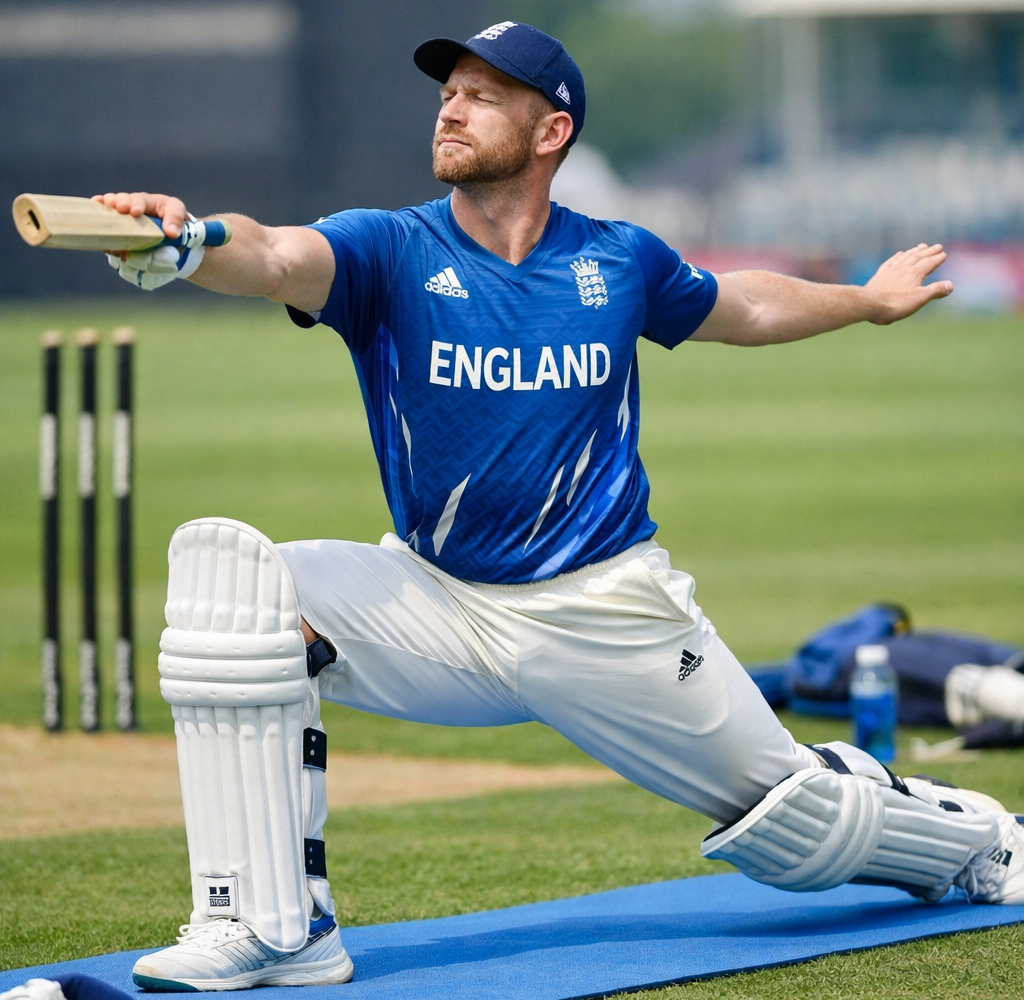
Sources within the England camp report that Buttler has been rising before dawn to undertake extended sessions of vinyasa flow, pranayama breathing and what one insider described as “aggressive downward dog”. The aim, it is said, is to restore balance — both literal and metaphorical — to his batting.
An England performance consultant, speaking on condition of anonymity, said the move reflected a broader commitment to “holistic run accumulation”.
“We’ve analysed the data,” he explained. “Jos at his best is aligned — head still, base strong, chakras open. When those elements drift, so can the strike rate.”
Former captain Michael Vaughan suggested the approach may yet yield dividends, though he admitted it marked a departure from more traditional remedies.
“In my day, if you were out of form you just hit more balls,” Vaughan told Test Match Special. “Now it seems you hold more poses. But if it gets him back to clearing the ropes, who are we to question the lotus position?”
Team-mates are said to have been supportive, if occasionally bewildered. All-rounder Ben Stokes reportedly attempted a brief introduction to the practice before concluding that extended stillness was “not aligned with his personal brand”.
Buttler himself has not spoken publicly in detail about the programme, though in a brief press conference appearance he referenced “finding calm in the chaos” and “trusting the process, and the hamstrings”.
Sports psychologist Dr Amina Rahman believes the intervention could be as much symbolic as physical.
“When elite athletes adopt visible rituals, it sends a message — to themselves and to opponents — that they are actively confronting adversity,” she said. “Also, controlled breathing is preferable to shouting at oneself after miscuing a slower ball.”
Critics, however, have questioned whether England’s campaign requires serenity or simply a brisk return to the middle of the bat. Social media commentary has ranged from encouragement to suggestions that England’s powerplay strategy now resembles a guided meditation retreat.
There is, of course, a precedent for sporting reinvention. Athletes across disciplines have sought marginal gains in everything from sleep patterns to sourdough consumption. Yoga may yet join that list.
For now, England’s hopes rest not only on tactical recalibration but on the possibility that somewhere between warrior pose and savasana lies a rediscovered cover drive.
Should Buttler’s next innings begin with a serene exhale and end with a 90-metre straight six, few will question the wisdom of enlightenment. Until then, England wait — breathing steadily.


